
Insights & Ideas
Thought Leadership
Actionable frameworks for leaders and institutions navigating identity and strategy. Drawn from doctoral research, two decades of institutional leadership, and ongoing work with executives.
Anchor Points
Short reads. Real stories.
Each one lands on a principle worth keeping.
-
Leading and living a legacy begins with knowing.
Before any strategy or success comes the question: How do you know what you know?
British philosopher R. G. Collingwood wrote that “the mind realizes the presence of itself.” In modern terms, awareness begins when you notice your own thinking at work. Leadership starts there.
Identity shapes that process. The way you have lived, learned, and led influences how you interpret information and make decisions. Your background, values, and worldview quietly guide what you notice, what you trust, and what you question. This becomes your Knowing Framework—the foundation for how you understand complexity.
Knowing is not about collecting facts or data. It is about recognizing self. When you understand how your identity informs your choices, you lead with purpose and clarity.
Thoughts:
Clarity in knowing becomes the ground for building.
Building with clarity turns leadership into legacy. -
Best practices often look like shortcuts to success. They promise efficiency and predictability. Yet they can quietly erase what makes your leadership distinct.
Most best practices assume sameness. They work only when your context mirrors the example—with the same culture, goals, and conditions. When that is not the case, results flatten. The practice may still function, but it no longer fits who you are or what your organization stands for.
Frameworks work differently. They provide structure without imitation. They adapt to your identity and environment. They can be tailored to what you know to be true. And they build trust because they are grounded in authenticity.
Formulas copy. Frameworks think.
Formulas hold tight. Frameworks adjust.
Formulas repeat. Frameworks offer clarity that aligns with your unique position.When leaders design frameworks that reflect their own knowing, they lead with integrity and confidence.
Consider the Distinction:
Progress begins when imitation ends.
True innovation honors context.
Leadership matures through discernment, not duplication. -
Most leadership models emphasize performance. They measure communication, vision, and execution. Yet many of them forget the person behind the practice.
Authentic Leadership taught us to lead from within. When our founder, Dr. Tatum D. Thomas, participated in Harvard Business School’s Authentic Leader Development program, she experienced a deeply personal exploration of leadership grounded in purpose and self-awareness. Having the opportunity to hear directly from Bill George while there, she began forming her thinking around how leadership identity extends beyond the self.
That moment shaped the foundation for what would become the Leadership-Identity Nexus™. The Nexus builds on Authentic Leadership by recognizing that who you are is influenced not only by values, but also by culture, heritage, and legacy. Leadership strengthens when those experiences inform how you lead.
Leadership starts with self-awareness, but its strength grows through context.
Culture, heritage, and lived experience influence how authenticity is expressed.
Effective leadership aligns personal values with collective needs.
Identity and legacy strengthen trust, credibility, and clarity.Throughline:
Authenticity grounds effectiveness.
Identity amplifies purpose.
Leadership evolves when models remember the leader. -
Every legacy begins with work that endures. Over time, that work becomes a lineage—a story carried through skill, care, and conviction.
The right steward does more than receive. They understand where something came from, what shaped it, and how to honor it through change. Inheritance, at its best, is not ownership but responsibility—the act of protecting meaning while allowing growth.
One family spent thirteen generations farming the same soil. The land held their fingerprints—season after season, harvest after harvest. When the newest generation took over, they made a daring choice. They shifted from crops to wine, transforming the family farm into a vineyard. Some questioned the decision, but they saw it as stewardship in motion: not breaking tradition, but evolving it. They carried forward the family’s discipline, faith, and respect for the earth—translating those values into something new that could last another century.
That is the measure of readiness. True stewardship is not imitation or control; it is understanding essence well enough to adapt it. The right person grows what they inherit because they know both its origin and its purpose.
Carried Forward:
Stewardship lives in motion.
Legacy endures when adaptation honors origin.
What is carried forward grows stronger when guided by purpose. -
Legacy fulfills its purpose when what was once received becomes what is now given.
A community nonprofit began with a mission to help people from marginalized backgrounds gain skills and pathways to employment. One participant joined simply seeking stability. Through perseverance and curiosity, he built not only a career but a calling. He earned degrees in education and social change, taught high school English, led college counseling, and co-founded a digital platform supporting students’ growth. Years later, he returned to that same nonprofit—this time as a board member shaping its direction.
That return marks the moment when mobility becomes momentum. He did not just advance; he extended the ladder. Progress deepens when those who have risen turn their reach outward, expanding opportunity for others.
Leadership matures when it moves from personal ascent to collective elevation. The measure of success is not how far we rise, but how many rise because we did.
Continuum:
Impact finds its highest form in return.
Progress becomes legacy when success multiplies.
Leadership fulfills its purpose when those who rise extend the reach.
Our Founder
Tatum D. Thomas, PhD | Founder and CEO, Heirwell Anchor™
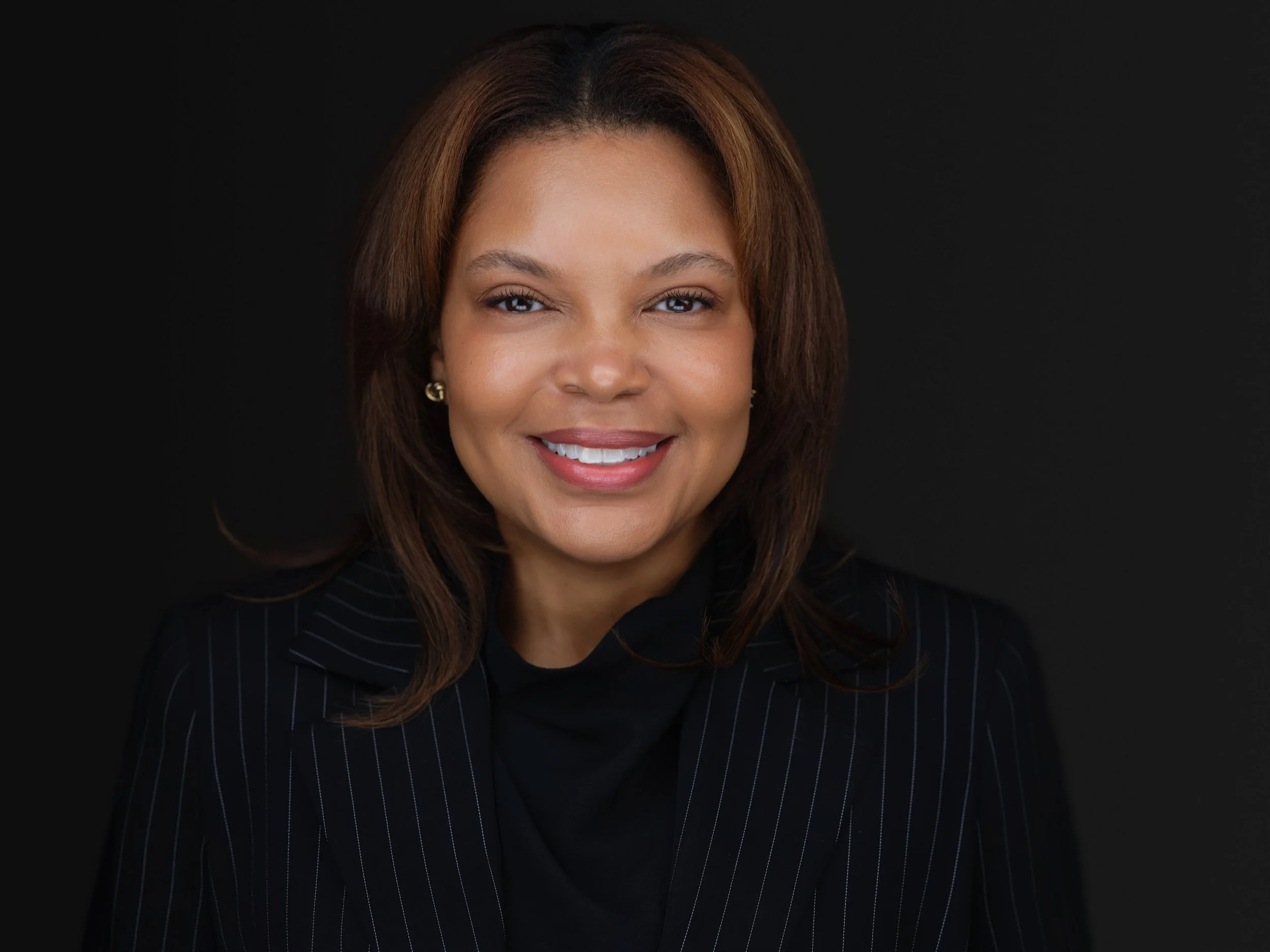
Heirwell Anchor™ was founded on a simple but overlooked truth: leaders thrive when they integrate identity with strategy.
During her doctoral research at The Chicago School, Dr. Thomas uncovered a critical gap in leadership models: most measure what leaders do while ignoring who leaders are. Her work shows how values and identity drive effectiveness and lasting results.
That conviction, that culture and identity are competitive assets, became the foundation for Heirwell Anchor's proprietary frameworks.
Dr. Thomas has spent more than two decades leading organizational strategy and development at New York University, Columbia University, and DePaul University. She has guided institutions through transformation, built governance structures, and coached senior leaders navigating high-stakes transitions.
She has delivered 30+ keynotes and workshops at national conferences including UPCEA, ISSA, the Middle States Commission, and the National HBCU Business Deans Roundtable. She serves on the Executive Board of UPCEA as Board President-Elect (2026–2027) and will serve as Board President (2027–2028).
Education
Executive MBA, Howard University
Certificate of Management Excellence, Harvard University
PhD in Organizational Leadership, The Chicago School
Perspectives & Contributions
Dr. Thomas in the field.
Contributing to national conversations on leadership, equity, and organizational effectiveness.
2024 · Evolllution
Fueling Growth Through Senior Leadership Championing Continuing Education | Link to article
2021 · Evolllution
Shaping the Future of Higher Ed With Short-Term Credentials | Link to article
2023 · Daily Herald
Examining the Many Benefits of Executive Education | Link to article
2019 · How to Survive Freshman Year
Following the Rules · Hundreds of Heads Books